Catch Us at Comic-Con 2009 (with Adam West update)

By Papa Llama - July 20, 2009

batman-adam-west

Friday, July 24

11:30-12:30 Comics Arts Conference Session #6: Can College Prepare Creators for Comics Careers?— Hope Larson (Chiggers), David Petersen (Mouse Guard), Nick Langley (Rocket Llama), Jaque Nodell (Super Human Resources), Marko Head (Marko’s Corner), and Steve Lieber (Whiteout) discuss whether college education can really help people pursuing comics careers. Room 30AB


Saturday, July 25

10:30-12:00 Comics Arts Conference Session #9: Is the Joker a Psychopath: You Decide!— Psychology professors Robin Rosenberg (The Psychology of Superheroes) and Travis Langley (Henderson State University) discuss the technical definition of a psychopath and review the criteria for antisocial personality disorder — does the Joker fit the clinical definition? Is he more than just crazy? They are joined by Joker experts Jerry Robinson (The Superhero: The Golden Age of Comic Books, 1938—1950), famed “Joker-fish” scribe Steve Englehart (The Point Man), and film producer Michael Uslan (The Dark Knight). Room 30AB
  
Update
 
The online Comic-Con schedule hasn’t caught up with this information yet because it was only yesterday that we got final confirmation. Adam West (Batman TV series, The Family Guy) is joining Dr. Travis Langley (Papa Llama around here) and the others on the Joker panel.
 

Also on Saturday, July 25

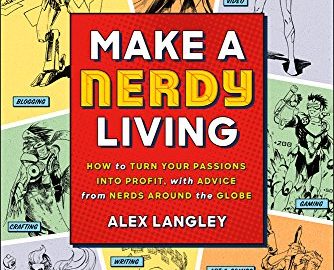
Join Rocket Llama creator Alex Langley and our friends from The Workday Comic and Reddie Steady among others in an afternoon poster session: Erica Ash, Thad Allen, Carly Cate, Thomas Sepe, and Ultimate Tommy Cash.

2:30-3:30 Comics Arts Conference Session #12: Poster Session— Want to go in depth with a comics scholar? On Thursday, Friday, and Saturday the PowerPoints of the poster presenters will be available to read in printed “poster books,” and the scholars will be available in this session to discuss their presentations in small-group and one-on-one discussions. Matthew J. Brown (University of California, San Diego) explains how psychologist William Moulton Marston used his creation Wonder Woman to enact his project of emotional re-education about female love-domination. Erica Ash (Henderson State University) explores the circumstances in the 1980s that lead to real-world vigilantes and a violent breed of fictional heroes and anti-heroes. Thad Allen (Henderson State University) uses modern science and technology to examine whether some of the ways in which superheroes have gained their powers can actually occur. Alex Langley (University of North Texas) assesses addictive behavior in gamers, comics lovers, and other pop culture fanatics. Thomas Sepe (Henderson State University) looks at the history of comic books being used as a venue to communicate political propaganda. Evan Moreno-Davis (University of California, San Diego) analyzes the implicit value system in hero narratives that valorize individual achievement as a force for good. Sabrina Starnaman (UCSD) draws on disability studies to see how the facial disfigurement of figures like the Joker, Two-Face, and Jonah Hex makes meaning beyond the stigmatized existence of the impairment. Carly Cate (Henderson State University) examines how story-driven characters such as Batman have been usurped by commercial creations like Hello Kitty. Ariel Schudson (UCLA) focuses on the Jon Favreau Iron Man film as a palimpsest for the adaptation and re-adaptation of the Iron Man mythos. Law professors Jamie Cooper and William Aceves (California Western School of Law) show how comics are being used in legal education.

Gender Poster Panel: Jillian Burcar (University of Southern California) argues that The Walking Dead series calls for the destruction of the old order by rethinking the ways America conceives of gender and sexuality. Diana Green (Minneapolis College of Art & Design) examines the sexual conundrum of Paul Chadwick’s Concrete, who not only has an active and successful sex life and has birthed a child but remains an active heroic figure.

Batman Poster Panel: Tommy Cash (Henderson State University) asks why the Dark Knight needs a Boy Wonder and finds that the Dynamic Duo exemplify Aristotle’s ideal of the “Friendship of Virtue.” Geri Lawson (CSU-Long Beach) examines how The Dark Knight Returns subverted the dominant voices of 1980s patriotism and the normative rigidity of the superhero’s sexualized body.

Romance Comics Poster Panel: Jarett Kobek (www.kobek.com) explores the effect of the counterculture on romance comics and the tendency of American commercial art to easily commodify even the least likely sources. Jacque Nodell (Super Human Resources) unearths the forgotten romance comics work of artists like Winslow Mortimer, Don Heck, and Jim Steranko who breathed life into the beautiful women that grace the pages of romance comics.

WonderCon 2008: Nick Langley, Carly Cate, Thomas Sepe.

WonderCon 2008: Nick Langley, Carly Cate, Thomas Sepe.

About The Author

Papa Llama

Comments

Leave a Reply

Please note: Comment moderation is currently enabled so there will be a delay between when you post your comment and when it shows up. Patience is a virtue; there is no need to re-submit your comment.